



Hurghada to Luxor in a day: how the trip works and how to make the most of it
Luxor holds an extraordinary concentration of ancient Egypt: the vast temple complex of Karnak, the royal tombs of the Valley of the Kings, the terraced temple of Queen Hatshepsut and much more, all within a few kilometres of each other on the banks of the Nile. From Hurghada it is roughly a four-hour drive each way, which makes a full day trip possible — long, but possible.
This guide explains how a typical day trip works, what you will see, how to prepare, and how to get the most out of a day that many visitors remember long after the beach days have blurred together.
Is a day trip worth it?
It depends on what you want. If you have a strong interest in ancient Egypt and plenty of time, two or three nights in Luxor itself is the richer experience: you can see more sites, visit them at quieter hours and enjoy the town in the evening. But if you are on a beach holiday and want to see the highlights without moving hotels, a day trip is an efficient way to stand in front of monuments you have seen in books all your life.
Be honest with yourself about the length of the day. Pickup is usually before dawn, and you are typically back at your hotel in the evening, after some eight hours on the road in total and a full day on your feet. Most adults manage it comfortably; very young children and anyone who struggles with heat or long journeys may find it hard.
How the day usually runs
Every operator has its own timing, but most full-day trips follow a similar pattern.
Early morning: pickup and the drive
Pickup is commonly between 4:00 and 5:30 in the morning, depending on where your hotel is. Many operators provide a breakfast box for the journey. The road runs south along the coast to Safaga and then inland across the Eastern Desert to the Nile valley, through mountains that are spectacular as the sun comes up. There are usually one or two rest stops on the way. Police checkpoints along the road are normal; your driver handles them, and you may be asked to show a copy of your passport, so carry one.
Mid-morning: the east bank and Karnak
Most trips start on the east bank of the Nile with the Temple of Karnak, one of the largest religious complexes ever built. Its most famous space is the Great Hypostyle Hall, a forest of 134 massive columns, many still carrying their carved and painted decoration. Karnak grew over some two thousand years as one pharaoh after another added gates, courts and obelisks, and a good guide will help you read that history in the stones.
Some trips also include, or offer as an option, a visit to Luxor Temple in the centre of town, which is especially atmospheric late in the day.
Lunch, and crossing the Nile
Lunch is usually at a restaurant near the river. Some trips cross to the west bank by road over the bridge; others include a short motorboat crossing, which is a lovely, cool break in a hot day.
Afternoon: the west bank
The west bank was the land of the dead, where the pharaohs were buried and their memory celebrated. The three classic stops are:
- The Valley of the Kings. Here, cut deep into the hillside, are the tombs of New Kingdom pharaohs. The standard entry ticket covers three tombs, chosen from those open that day; the selection rotates to protect the paintings. A few of the most famous tombs, including Tutankhamun’s, require a separate ticket. The colours inside some tombs are astonishingly fresh after more than three thousand years.
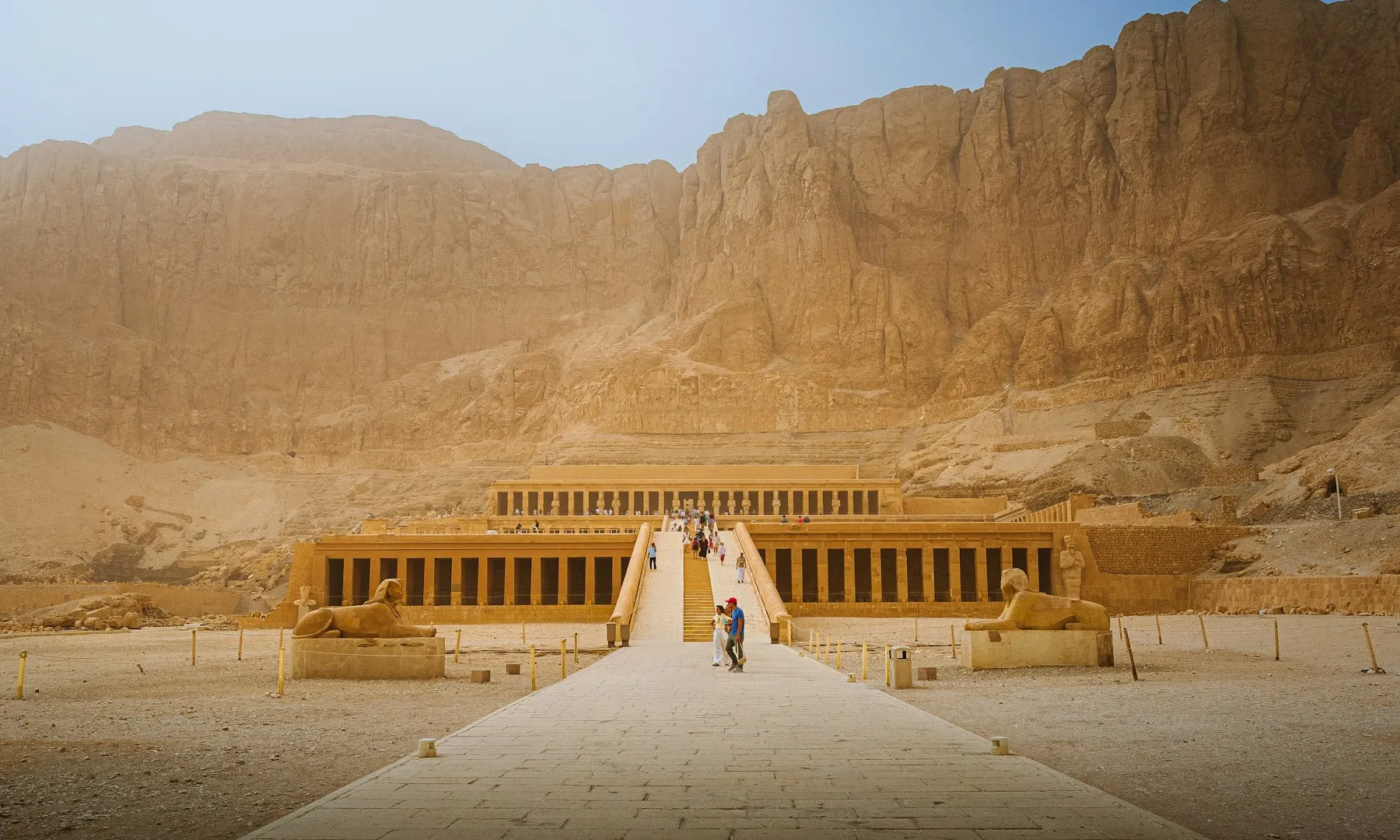
- The Temple of Hatshepsut. Built for one of Egypt’s few female pharaohs, its long colonnaded terraces rise against a wall of golden cliffs at Deir el-Bahari. It is one of the most striking buildings in Egypt, and very exposed to the sun, so this is the moment for your hat.
- The Colossi of Memnon. Two enormous seated statues of Amenhotep III, which once guarded his mortuary temple. It is usually a short photo stop.
Evening: the drive back
Trips normally leave Luxor in the late afternoon, arriving back in Hurghada in the evening. Most people sleep for much of the way.
Tickets, guides and what is included
Day trips are sold in different ways. Some prices include all entry tickets; others include transport, guide and lunch, with tickets paid separately. Some include the optional extras — the Nile crossing, Luxor Temple, the Tutankhamun tomb ticket — and some charge for them. When you compare trips, compare what is included, not just the price.
A good guide makes an enormous difference at these sites. Without context, Karnak can feel like a beautiful maze of stones. With a knowledgeable Egyptologist explaining who built what, what the carvings show and how the temples were used, the day comes alive. Ask what language your guide will speak and how large the group will be.
What to wear and bring
- Comfortable walking shoes. You will walk several kilometres, over uneven stone, sand and steps, including steep passages into the tombs.
- Light, breathable clothes that cover your shoulders. There is no strict dress code at the temples, but covered shoulders protect you from the sun, and modest clothing is appreciated.
- A hat, sunglasses and sunscreen. The west bank in particular offers little shade.
- Water. Bring a refillable bottle; drinks are available at the sites, but you will want water with you all the time.
- A warm layer in winter, for the pre-dawn start and the air-conditioned bus.
- A copy of your passport, or the original if your operator asks for it.
- Cash in small notes for drinks, optional tickets, toilets at rest stops and tips.
Photography
You will want photos everywhere, and in most open-air areas photography is no problem. Inside the tombs, rules are stricter, and they have changed over the years. Flash is never allowed — it damages the painted surfaces — and some tombs or areas may have specific restrictions. Ask your guide on the day, follow the guardians’ instructions, and remember that some of the best moments are the ones you simply look at.
Heat: the single biggest factor
Luxor is inland and considerably hotter than the coast. From roughly May to September, afternoon temperatures commonly exceed 40°C. In those months a day trip is still very possible, but it is demanding. Drink steadily throughout the day, not only when you feel thirsty; wear your hat; use the shade whenever the guide is talking; and do not hesitate to skip an optional stop if you are flagging.
From October to April the climate is far kinder: warm, dry days that are ideal for exploring. If you can choose your dates, these months make for the most enjoyable visit.
Tips for a better day
- Sleep early the night before. The alarm will go off very early.
- Read a little in advance. Even ten minutes on the New Kingdom pharaohs — Hatshepsut, Thutmose III, Ramesses II, Tutankhamun — makes the guide’s stories more vivid.
- Charge your phone and bring a power bank. It is a long day of photos.
- Stay with your group at the sites. They are big and busy, and groups move on to a tight schedule.
- Be ready for vendors. At the entrances you will be offered souvenirs. A polite, firm “no, thank you” and walking on is enough.
- Leave room for wonder. It is easy to rush from stop to stop taking photos. Take a few minutes at Karnak and in the Valley simply to stand still and take it in.
Eating on the day
Because the day starts so early, most people eat a light breakfast on the bus and are hungry by the time lunch comes. Bring a snack you like — fruit, biscuits, a cereal bar — to keep your energy up between the sites. Lunch on most trips is a buffet or set menu of Egyptian dishes: rice, grilled chicken or fish, salads, bread and fruit. If you have allergies or a special diet, mention it when you book, so the operator can warn the restaurant in advance. Drink water steadily through the meal, too: the afternoon on the west bank is usually the hottest part of the day.
Luxor or Cairo?
Many visitors to Hurghada can fit in only one long trip, and the question is usually Luxor or Cairo. Cairo means the Pyramids of Giza and the Sphinx, together with the treasures of the Egyptian museums — iconic, enormous and busy, and further away. Luxor means temples and tombs on a scale that surprises almost everyone, in a smaller, calmer setting, and it is the shorter drive.
If seeing the pyramids is a lifelong dream, choose Cairo. If you want to understand how ancient Egyptians lived, worshipped and prepared for the afterlife, and to see painted tombs that look almost new, choose Luxor. Either way you will come back with a much deeper sense of the country than the coast alone can give you.
Day trip or overnight?
If you can spare the time, an overnight stay transforms the experience. You can visit the west bank early in the morning before the heat and crowds, see Luxor Temple lit up at night, take a felucca on the Nile at sunset, and avoid doing the long drive twice in one day. Many operators offer two-day versions with a hotel night in Luxor.
But a day trip remains one of the great experiences of a holiday on the Red Sea coast. Very few places on earth let you swim over a coral reef one day and walk through a pharaoh’s tomb the next. If you would like help choosing between a day trip and a longer stay, or want to know exactly what is included in ours, message us with your dates and we will gladly help you plan it.




Leave a comment